Riding the Well of Death: Soma Basu’s Defiance of Gravity and Tradition
Inside Jagdalpur's Wall of Death with Soma Basu, a Bengali stunt rider who turned a traditional event into her stage.
For three seconds everything is suspended: gravity, the audience’s breath. The wheels lose contact with the ground and search for traction on the vertical wooden wall. Then centripetal force wins, and the motorcycle becomes parallel to the ground.
It’s evening in Jagdalpur. The air is trapped under the orange tarpaulin that covers the arena. Dense smoke from cigarettes and engines remains suspended in the humidity of the Well of Death, or Wall of Death, depending on who you ask. Five riders are preparing their motorcycles. One of them is a Bengali woman named Soma Basu.
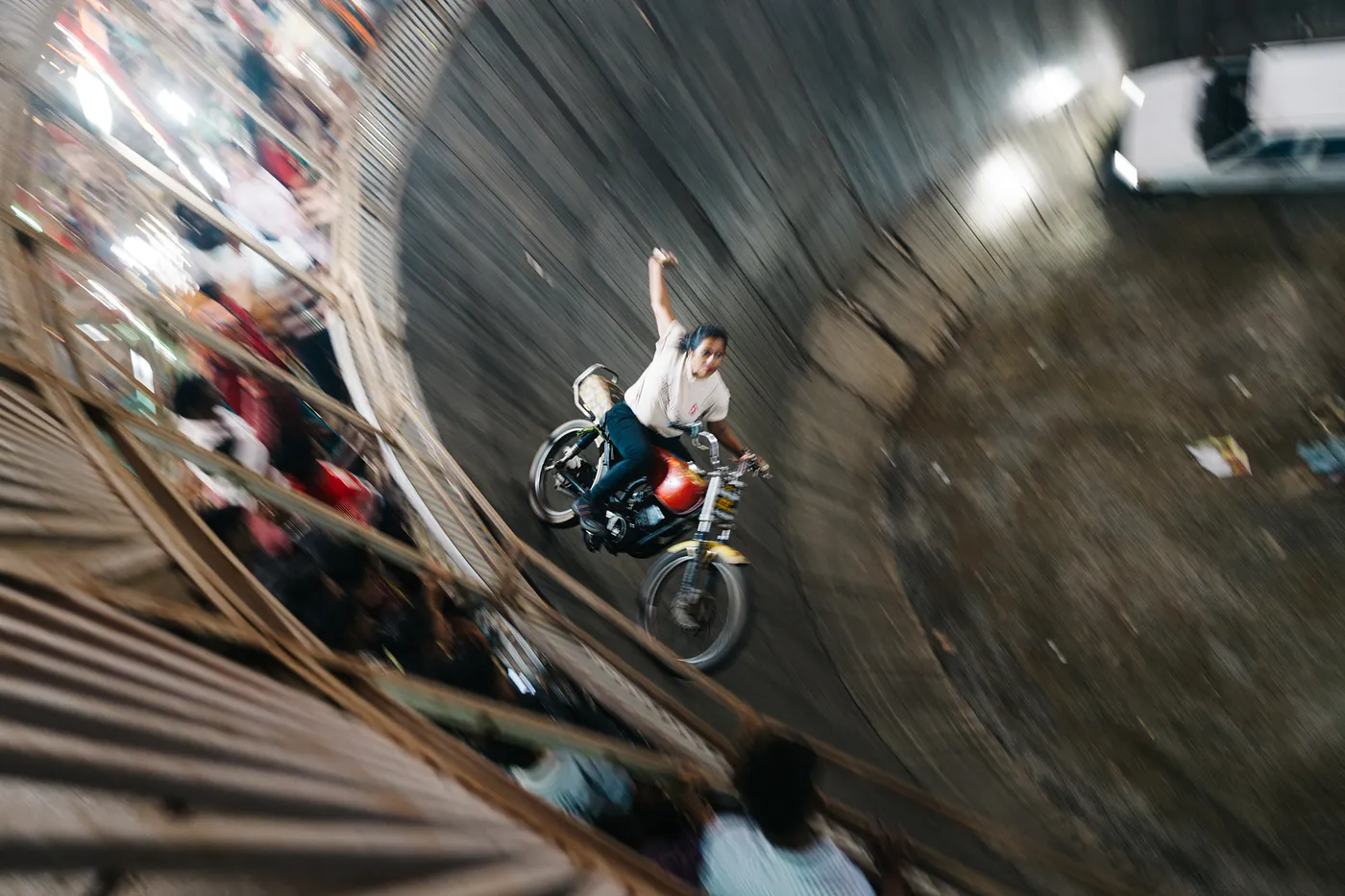
We are intrigued. It is becoming more common to find women working in stunt performances in India, but they still tend to stand out as a kind of novelty. When we start asking her questions, the other riders ask us to leave. They explain that, as a woman, she has the privilege of performing here, but nothing else, so when she finishes, she is not allowed inside.
The way up.
When we exit the Well of Death, she tells us her life started in 1991. Her father’s ended when she was four months old. Growing up, she had a difficult stepfather and a tense relationship with her family. She wanted to achieve great things, to work and be independent. She rebelled the only way she could, by adopting hobbies considered uncommon for a girl.
“I was lively. I played cricket. I did things boys did. So everything escalated the day I went with some neighbors to a local festival.”
There, she encountered something alien to her: a cylindrical construction made of 5,000 wooden planks, with a Nepali boy inside, washing cars. She approached him.
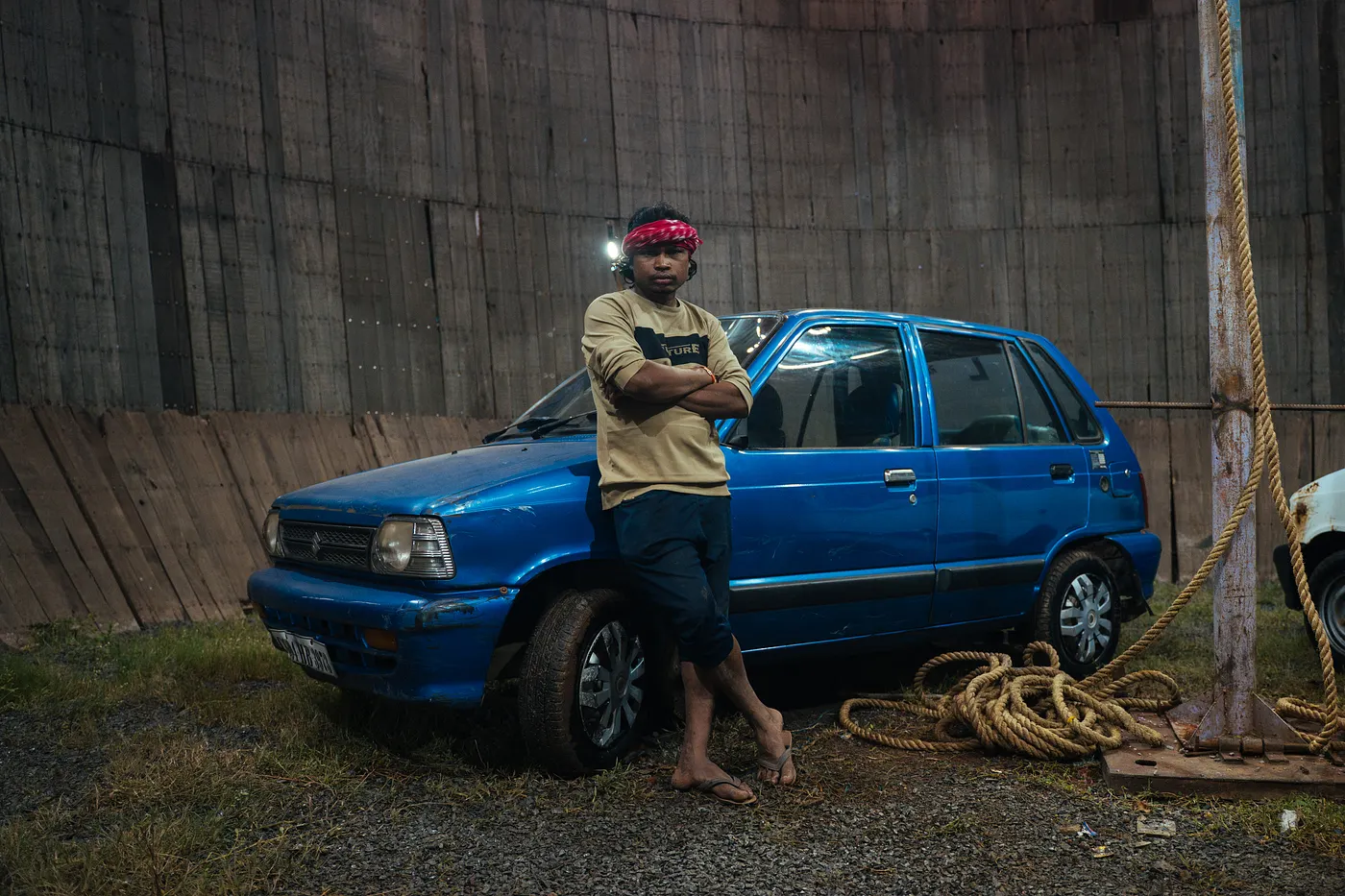
“What is this?” she asked.
“Maut Ka Kuan,” he answered. “People drive on the walls.”
She told him it was too incredible to be true. He invited her to watch the show later. From the top of the tub, designated for the audience, she saw the riders climbing the walls while suspended on their motorcycles, adopting dangerous poses and expertly collecting tips from the crowd.
“It was impossible, yet it was happening in front of me. It seemed like magic. And I had to do it.”
She quickly found the owner, Babuji, a retired army officer, and asked him to allow her to train with his riders.
“Are you Bengali?” he asked. She nodded and immediately felt a wall rising before her.
“Bengalis are known cowards, and you’re a girl. This is not work for women.”
She was hurt. “But that made me even more determined to do it. I begged him to give me a chance.”
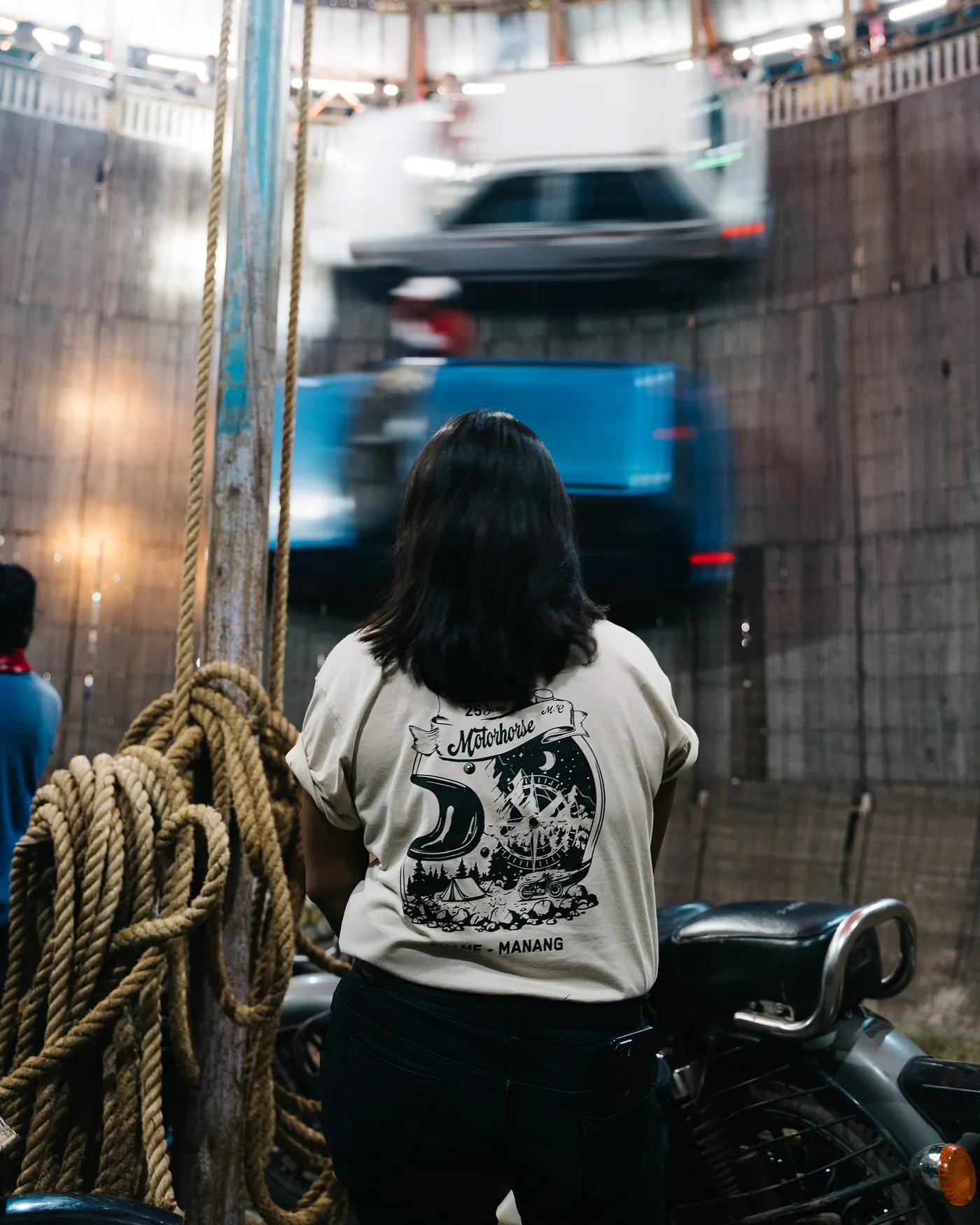
He told her that if she was serious about her passion, she should come to training the next day, at a fair behind Dum Dum Central Jail.
Her mother, of course, did not allow her to go. Soma sneaked away anyway and attended the appointment.
“When I saw my mother arrive, I tried to hide because she had come to take me home. Then I cried, saying I didn’t want to go back. She couldn’t convince me to leave, so she gave up and turned to Babuji.”
“This is now your child. You take care of her.”
From then on, Soma grew up there as Babuji’s daughter.
Training started immediately. It was a rigid structure, sleeping in a circus wagon, waking up to arduous coaching sessions preceded by morning prayers, and following a strict diet of salad and paper-thin chapati. At the end of the day, she was often hungry and would secretly go to other wagons to search for rice.
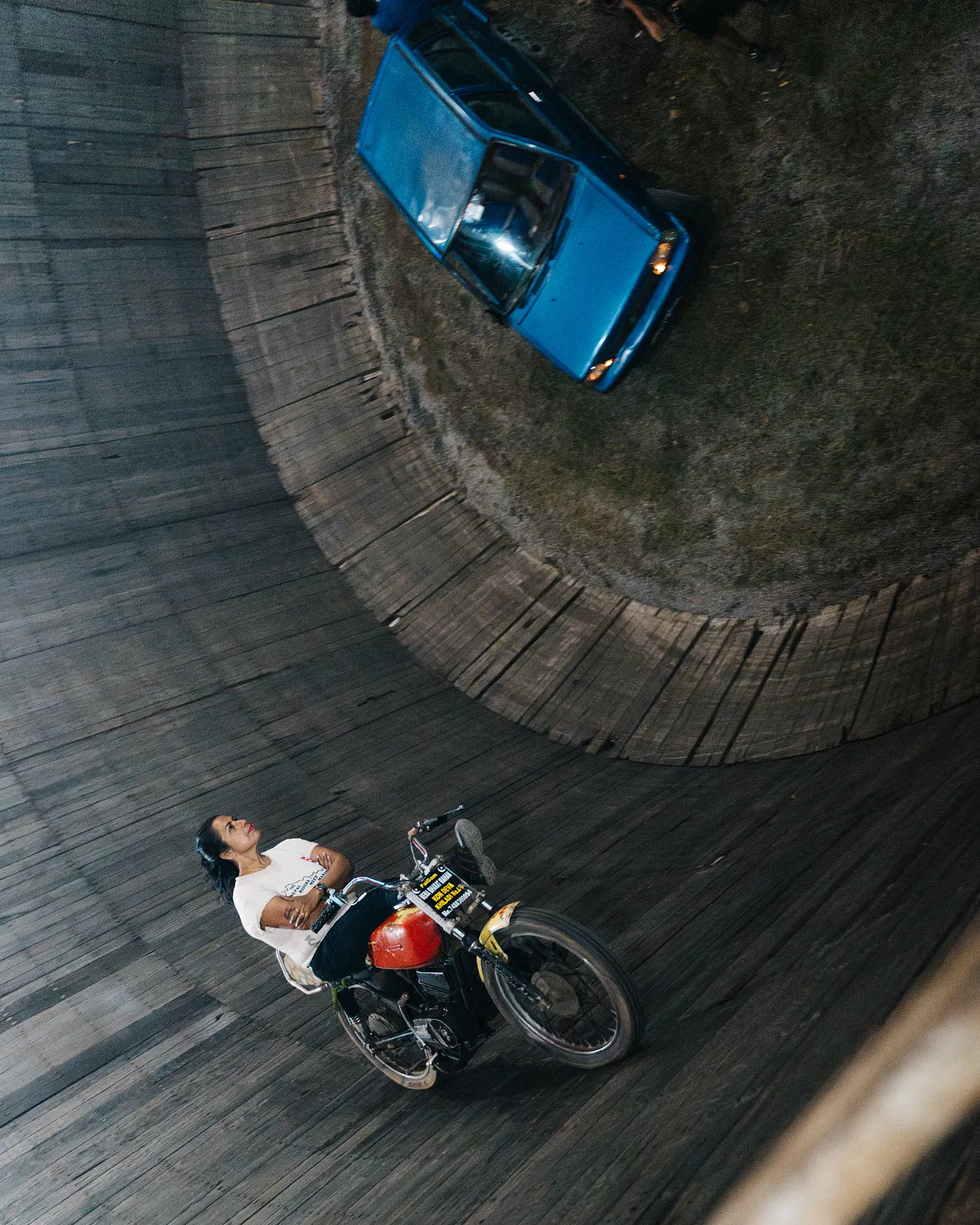
“Before, I couldn’t even ride a motorbike. I only rode a bicycle,” she confesses. Suddenly, she had to get used to the risk of riding at high speed.
“First I drove in an empty field. After a few days, I trained in crowded places. Then gradually inside the well, close to the ground, because I wasn’t allowed to go up and touch the surface.”
This continued for six months. She was bored out of her mind, but they didn’t give her permission to ascend in their presence. They said there were no girl riders like her, and worried about how the audience would see the act.
One day, Babuji, the manager, and the riders all went to book a field.
“I was ordered to train alone for one hour. It was my chance. I took the bike and went straight up.”
When the others returned, they found her gleefully circling the motordrome. Shocked at her audacity, they soon applauded her, celebrating her triumph and sharing sweets among themselves.
“From that day, fifteen years ago, I have never stopped performing.”
Perks of the job
The rigid expectations of the Bengali woman are suspended, creating room for new possibilities and a new identity. The stuntwoman, the athlete, emerges, but only for fifteen minutes, on the tracks of the wooden wall the spectators look down upon.
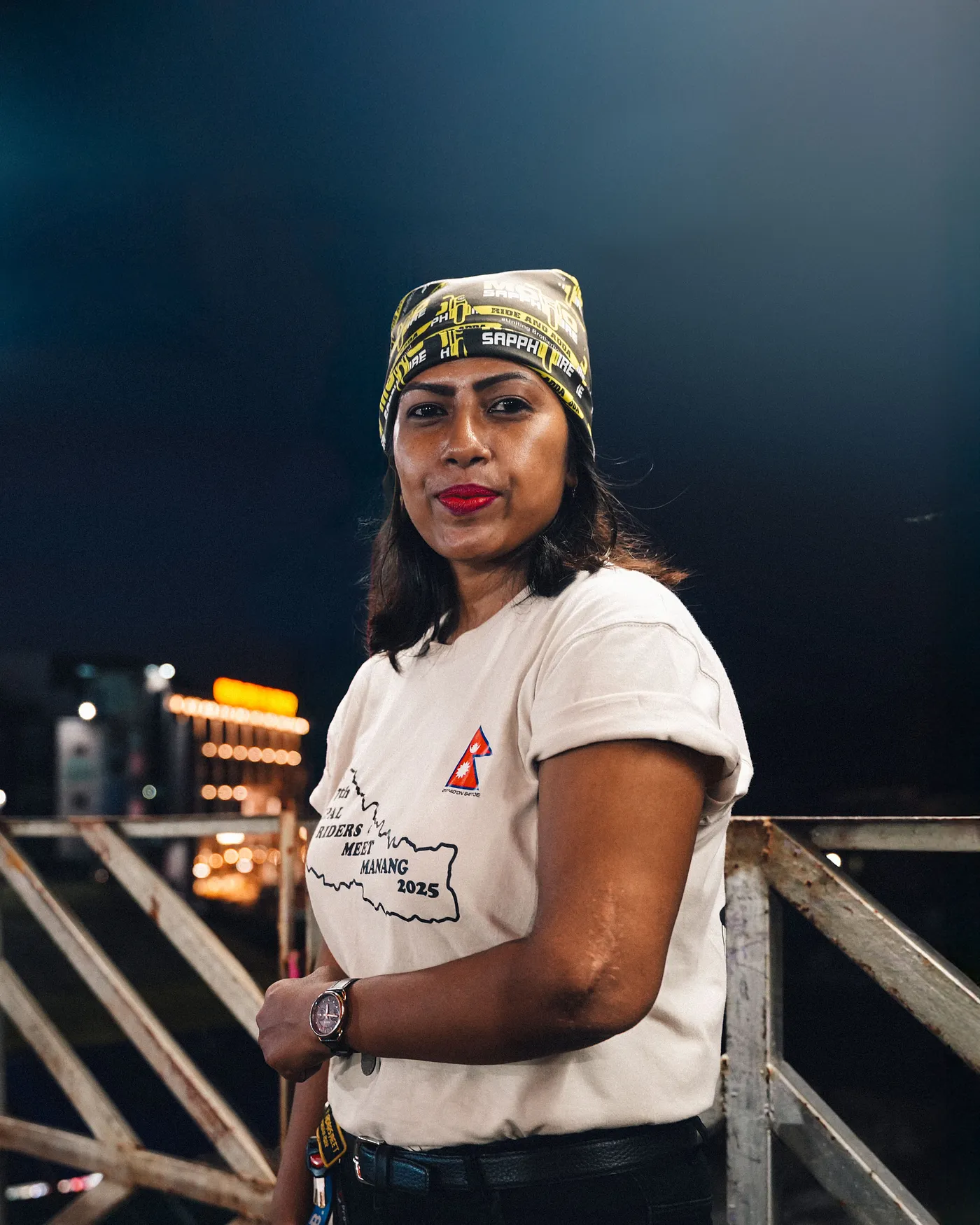
She spins fast, with one hand and one foot, doing The Thinker pose, collecting bills from the audience, without any security equipment. We ask her why she doesn’t use a protective helmet or anything that could save her life from a fall.
“It’s called the Well of Death,” she replies.
She reveals to us her scars with delight: a fractured elbow, screws in her arm, and a thirty-foot fall that split her lip and chipped her teeth.
“I worked for it when I was injured,” she says, showing us her Royal Enfield 411. “This May 2nd was my birthday. I wanted to gift it to myself. In the ten days before the final installment, I had a severe accident. I couldn’t stop crying while the doctor was stitching, not from pain, but because I was worried. I kept thinking, how will I pay for the bike now?”
“The next day I had three bandages on my leg. My wrist was wrapped with a heating pad. I wore slippers because my leg was swollen. But I drove for nine days and earned the money for my present.”
“So I see every accident as part of an achievement. It hurts, but it is proof to myself that I can do anything despite the pain.”
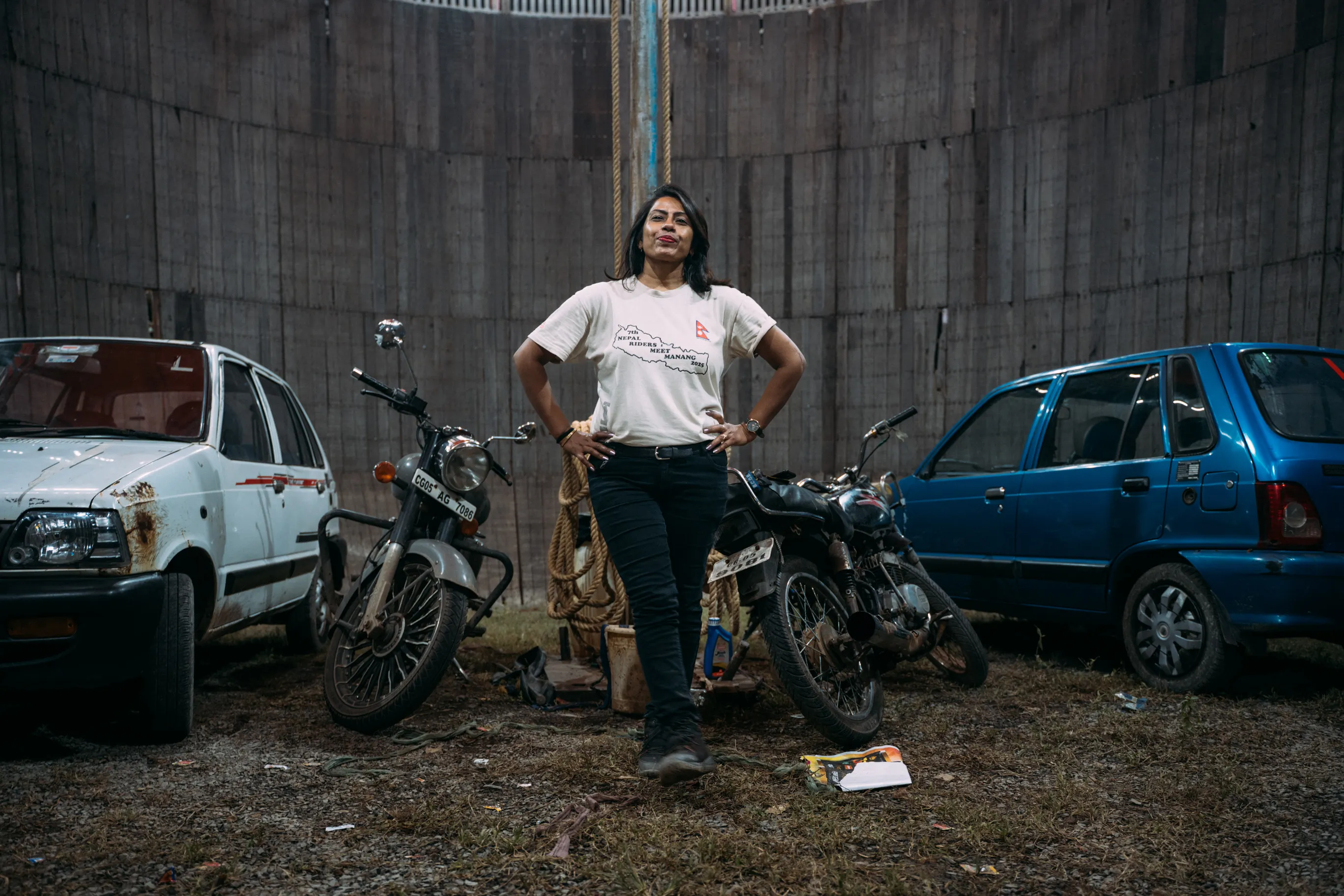
The last photo we take of her is in the center of the arena. She is collecting applause, hands on her hips. She has overcome what once seemed undefeatable. Instead, she rides it every time the motorcycle floats above the ground.
Article written by Ana Ben, drawing from an interview by me and @Mattia Astori for www.sacratos.com